Renewable Energy
This lesson plan combines interactive learning, critical thinking, and practical application to help students gain a well-rounded understanding of renewable energy. Learn what renewable energy is and its difference from non-renewable energy.
-
Identify the main types of renewable energy and their applications
-
Understand what renewable energy is and how it differs from non-renewable energy sources.
-
Explore the environmental and economic benefits of renewable energy.
-
Analyze the challenges associated with transitioning to renewable energy.
Materials Needed:
Whiteboard or chart paper
Markers
Small items for a hands-on activity (e.g., mini solar panels, small windmill kits, or basic experiment materials)
Lesson Outline:
1. Introduction
Engage:
“What do you think renewable energy is?”
“Can you name some types of renewable energy?”
“Why do we need renewable energy?”
Write responses on the board and group them into categories (e.g., types of energy, benefits).
What is Renewable Energy?
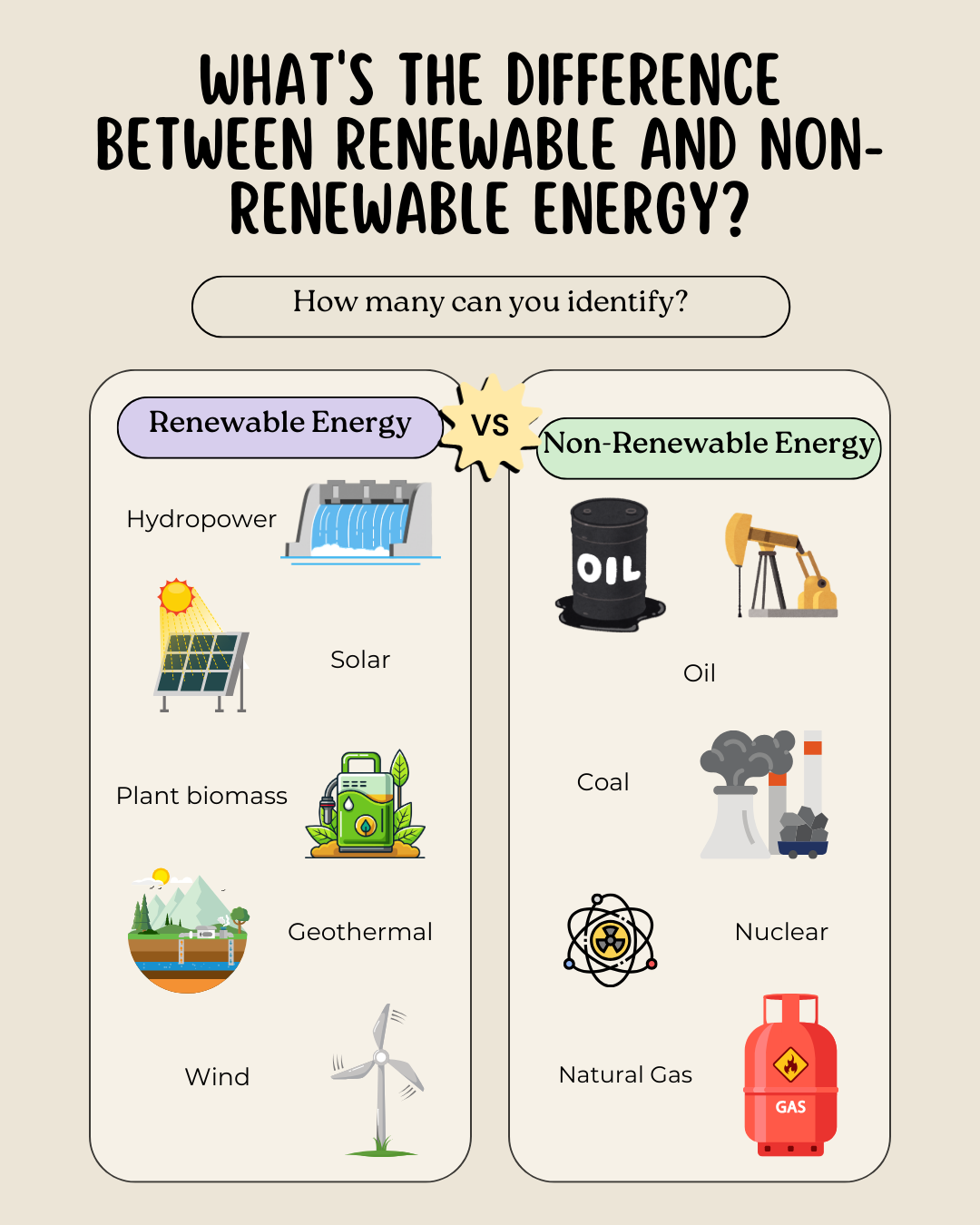
Energy from sources that are naturally replenished and sustainable, such as sunlight, wind, and water.
Difference from non-renewable energy (coal, oil, natural gas) is that non-renewable will be gone forever once used.
Types of Renewable Energy
Solar Energy: Captures sunlight to generate electricity or heat.
Wind Energy: Uses wind turbines to convert wind into electricity.
Hydropower: Harnesses the energy of flowing water.
Geothermal Energy: Uses heat from beneath the Earth's surface.
Biomass Energy: Converts organic materials into fuel.
Benefits of Renewable Energy
Reduces greenhouse gas emissions.
Provides sustainable energy for future generations.
Can create jobs and support local economies.
2. Hands-On Activity
Activity Option 1: Build a Mini Renewable Energy Model
Provide materials like mini solar panels, toy wind turbines, or water wheels.
Students work in small groups to assemble and test their renewable energy model.
Discuss: What factors affect how much energy can be generated?
Activity Option 2: Renewable Energy Debate
Divide the class into groups representing different energy types.
Each group argues why their energy source is the best option for a new city.
Students can address factors like cost, environmental impact, and reliability.
3. Reflection
Discussion Questions:
“Which type of renewable energy do you think is the most promising for the future and why?”
“What challenges do you think we face in switching to renewable energy?”
Take-Home Challenge:
Research your local area: What types of renewable energy are being used or could be implemented? Write a short reflection or prepare a poster to share with the class.
Assessment:
Participation in brainstorming and discussions.
Contribution to group activities or debates.
Reflection on the potential of renewable energy for the future.